Kovion Holdings
WorkServicesHow we workAboutJournal
Talk to us
Kovion Holdings

An independent studio that turns ideas into working software, for clients and for ourselves.

[email protected]
GitHubXLinkedIn

Studio

  • About
  • How we work
  • Work
  • Journal
  • Contact

Services

  • SaaS products
  • Web applications
  • Backends & APIs
  • MVPs for founders
  • Technical advice

Legal

  • Legal status
  • Terms of Service
  • Privacy Policy
  • Cookie Policy

Kovion Holdings is a trading name. It is an unincorporated business trading internationally and is not a registered company. It is operated by its founder, Amad Zulfiqar. More on our legal status.

© 2026 Kovion Holdings

Back to all articles
Engineering

What we learned building live rooms for Party Room
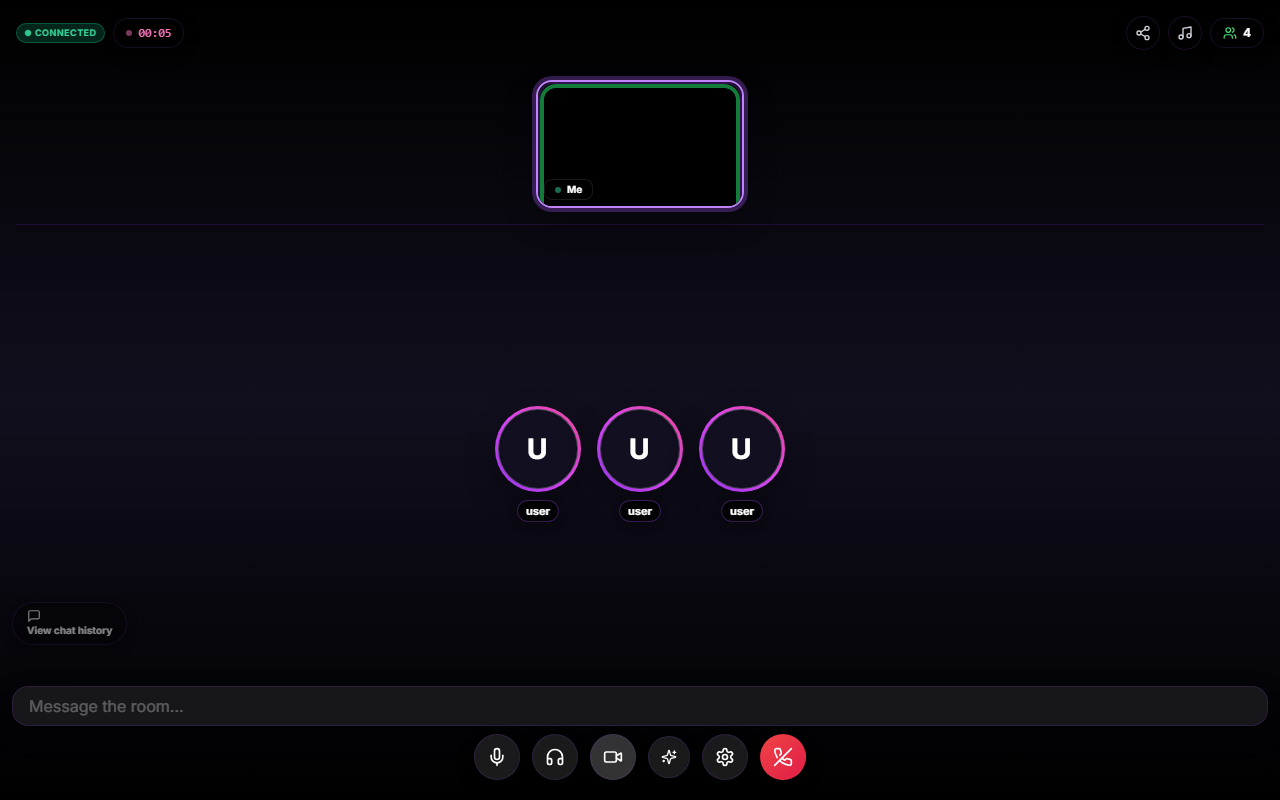
August 28, 20261 min read
What we learned building live rooms for Party Room

Real-time voice is unforgiving. A 200ms delay on a web page goes unnoticed; on a call it makes people talk over each other.

Peer-to-peer stops working fast

With plain peer-to-peer WebRTC, every participant sends their stream to every other participant. That's fine for two people. With ten, each phone is uploading nine video streams and the battery is gone in minutes.

So Party Room uses a selective forwarding unit (we use LiveKit). Each person uploads one stream; the server forwards it to everyone else and adapts quality to each connection.

Presence is the hard part

Knowing who is in which room, who is speaking and who just left has to feel instant on every device. We keep that state on the server and push changes over WebSockets, rather than letting each client guess.

Lessons

  • Measure on real phones on real mobile networks, not on a laptop on office Wi-Fi.
  • Design for people leaving abruptly. Tabs close, trains enter tunnels.
  • Keep the room list cheap to load. It's the first thing everyone sees.

You can see the result on the Party Room page.


Related Articles

Engineering

Multi-tenant SaaS on PostgreSQL: letting the database enforce the rules

Why we put tenant isolation in PostgreSQL row-level security instead of trusting every query in the app.

Read article
Next Multi-tenant SaaS on PostgreSQL: letting the database enforce the rules